
Metro Tunnel stations open in Melbourne - redefining city connectivity
WW+P has collaborated on the design for the biggest transformation of Victoria's rail network in 40 years.
Melbourne’s landmark Metro Tunnel project is set to redefine the city's transportation landscape with the official opening of its five new underground stations: Arden at North Melbourne, Parkville, State Library, Town Hall and Anzac on St Kilda Road, featuring the first ever connection between the Melbourne tram and rail network.
The architecture of the Metro Tunnel integrates a line-wide approach, creating enduring landmarks, distinctive and beautiful station interiors and buildings and their surrounds that Melburnians will embrace with pride for generations to come.
The design for the Metro Tunnel is a world-class collaboration between leading design practices Hassell, WW+P and RSHP.
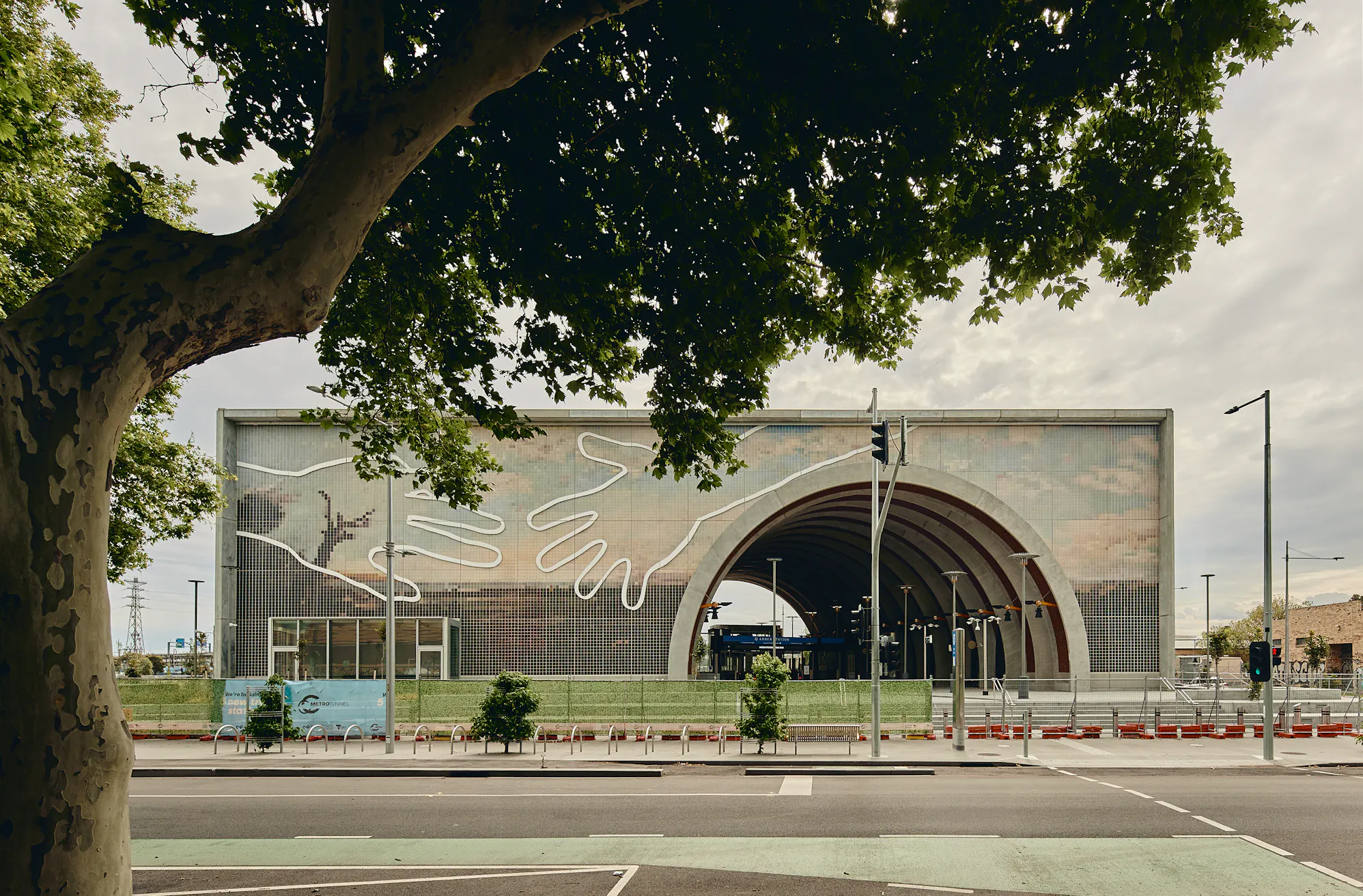
In a departure from conventional underground transport hubs, the Metro Tunnel stations foster a tangible connection to the streets and iconic landmarks of their respective locations. This design approach ensures that commuters remain intrinsically linked to the vibrant city above, creating a generous and uniquely Melbourne experience. At each location, the stations also deliver significant new public spaces, including the revitalised City Square, breathing new life and amenity into the heart of the CBD.
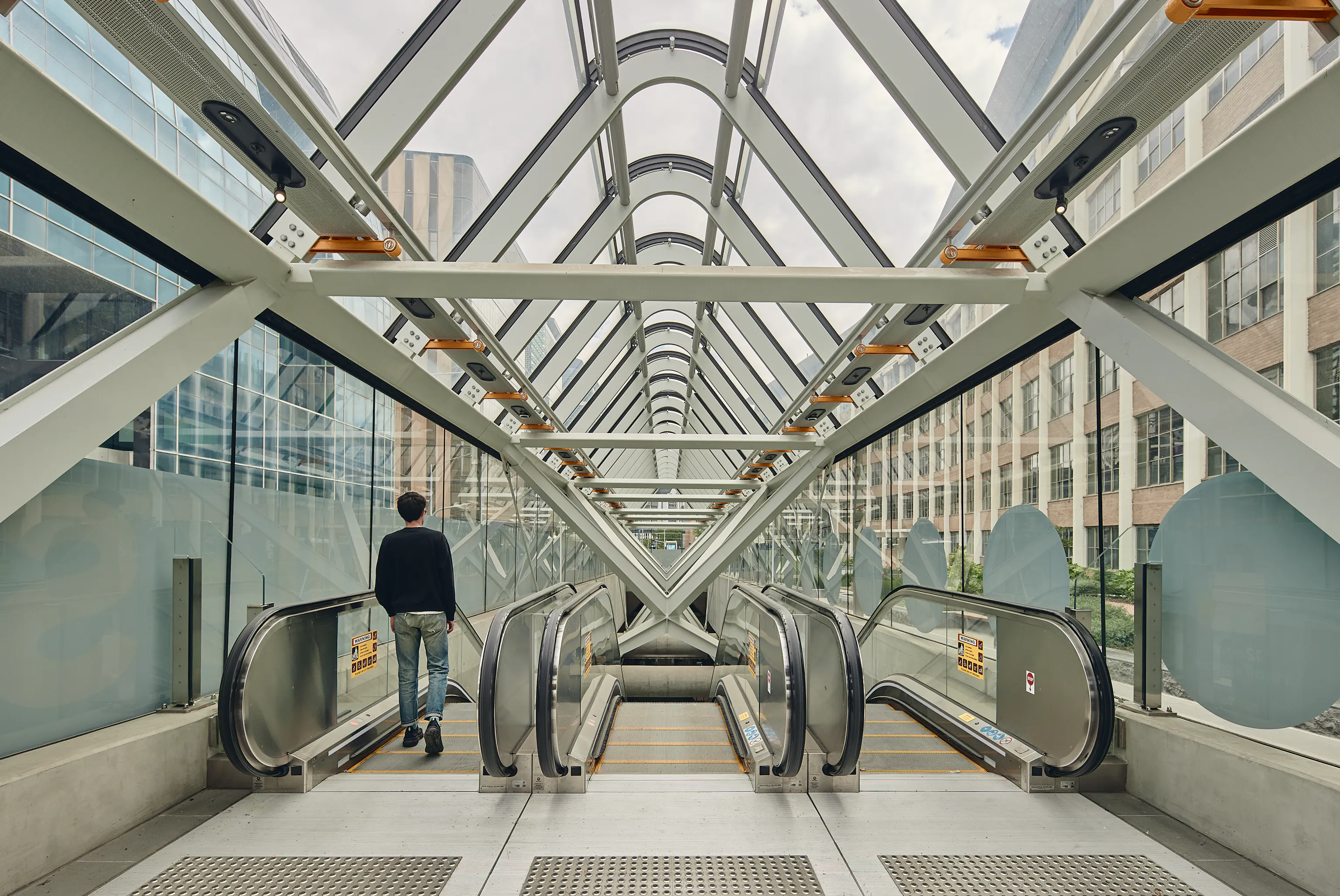
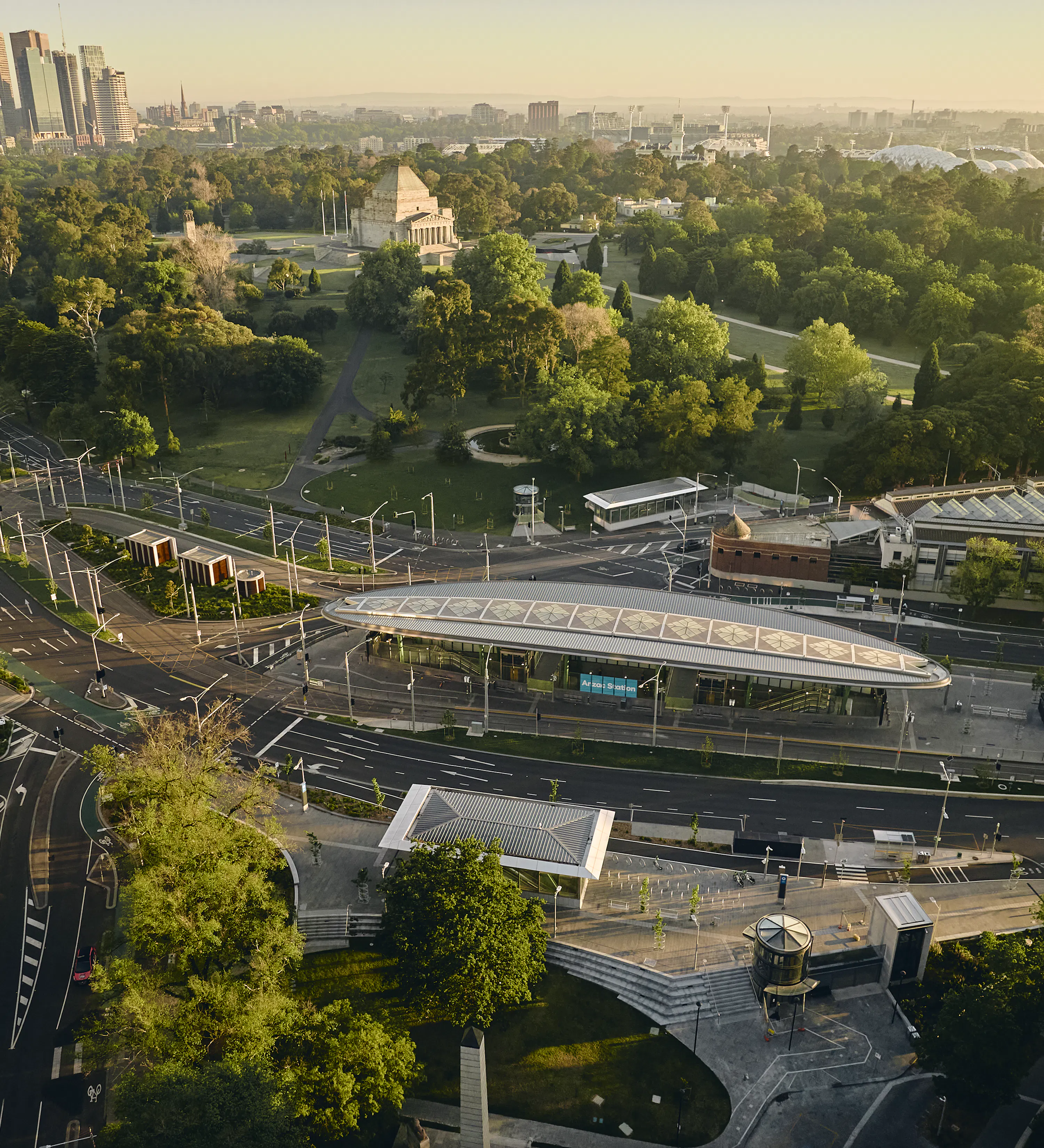
A key design principle of the Metro Tunnel stations is the integration of natural light and fresh air, fostering a sense of openness and wellbeing for commuters. At Arden and Parkville stations, expansive skylights flood the concourses with daylight, creating bright and inviting spaces. Materials like brick and timber are also specifically integrated into Arden and Anzac stations reflecting their respective locations and contexts. At Anzac station, the large elliptical canopy located in the centre of St Kilda Road shelters the concourse below, flooding the new underground connections to the platforms with daylight and providing shelter to those connecting to the tram network.
While the sheer depth and bustling CBD locations of State Library and Town Hall stations presented greater challenges, the design teams have responded with vast, cathedral-like underground spaces that evoke a feeling of airiness and grandeur. Natural light is also thoughtfully integrated into the main entrances of these central stations.
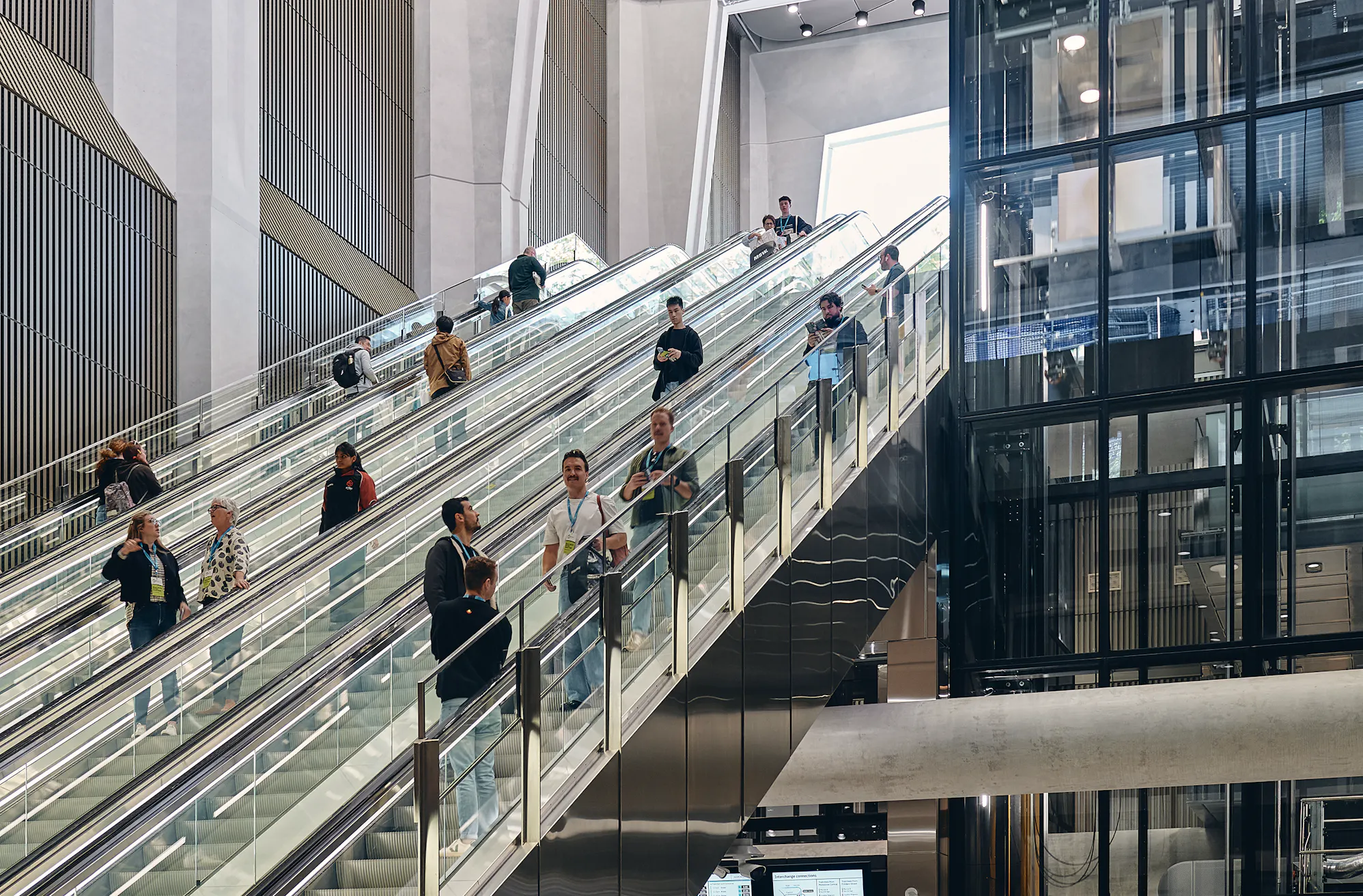
Melbourne is a city defined by its openness: its streets, laneways and public spaces create a vibrant and welcoming atmosphere. We wanted that openness to shape the design of the new stations; each station design maximises natural light and fresh air, creating passenger spaces that are truly world-class. Our focus on connection and visibility ensures travellers feel part of the flow of the city – the stations are not just places of travel, but seamless extensions of Melbourne’s public realm.
Rob Naybour, Chair
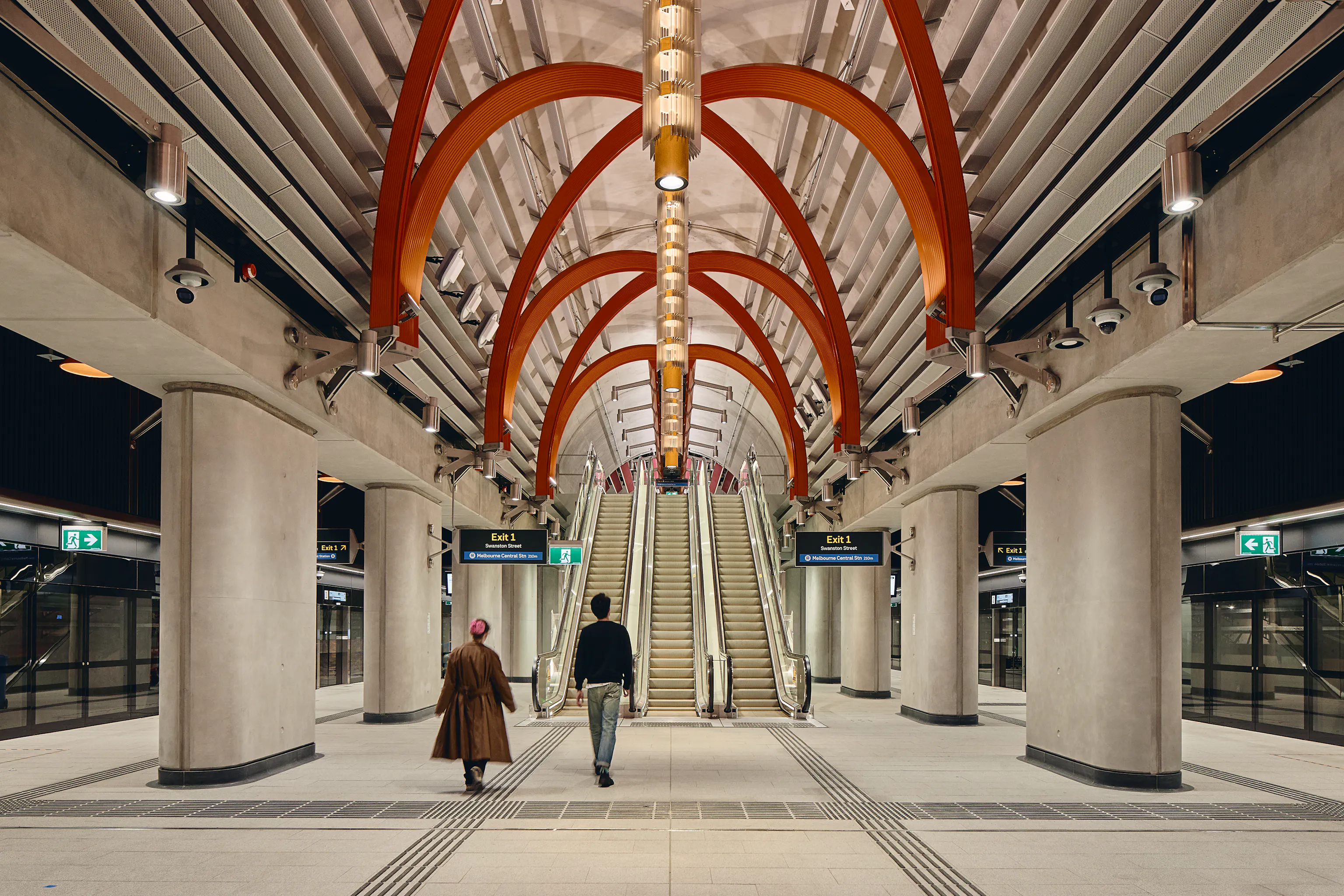
Throughout all of the stations a line-wide design element is immediately recognised as brightly coloured structures support all of the station’s services and hold a vast number of specifically designed light fixtures, cast in metal and featuring thousands of glass globes. Intuitive wayfinding is another line-wide feature, where brightly coloured metal baffles show commuters the way in and the way out of stations and guide them to their connections to other transport services.
Upon its full operation foreseen in February of 2026, the Metro Tunnel will seamlessly interconnect the Sunbury, Cranbourne, and Pakenham lines via a dedicated new tunnel beneath the city. This crucial infrastructure will establish a continuous rail artery from Sunbury in the northwest to Pakenham in the southeast, significantly easing congestion within the City Loop and enabling more frequent and efficient train services across the network.
Strategic connections, including at Town Hall Station, State Library Station, Footscray Station in the north-west and Caulfield Station in the south-east, also allow passengers to transfer between rail lines, further enhancing the network's connectivity.
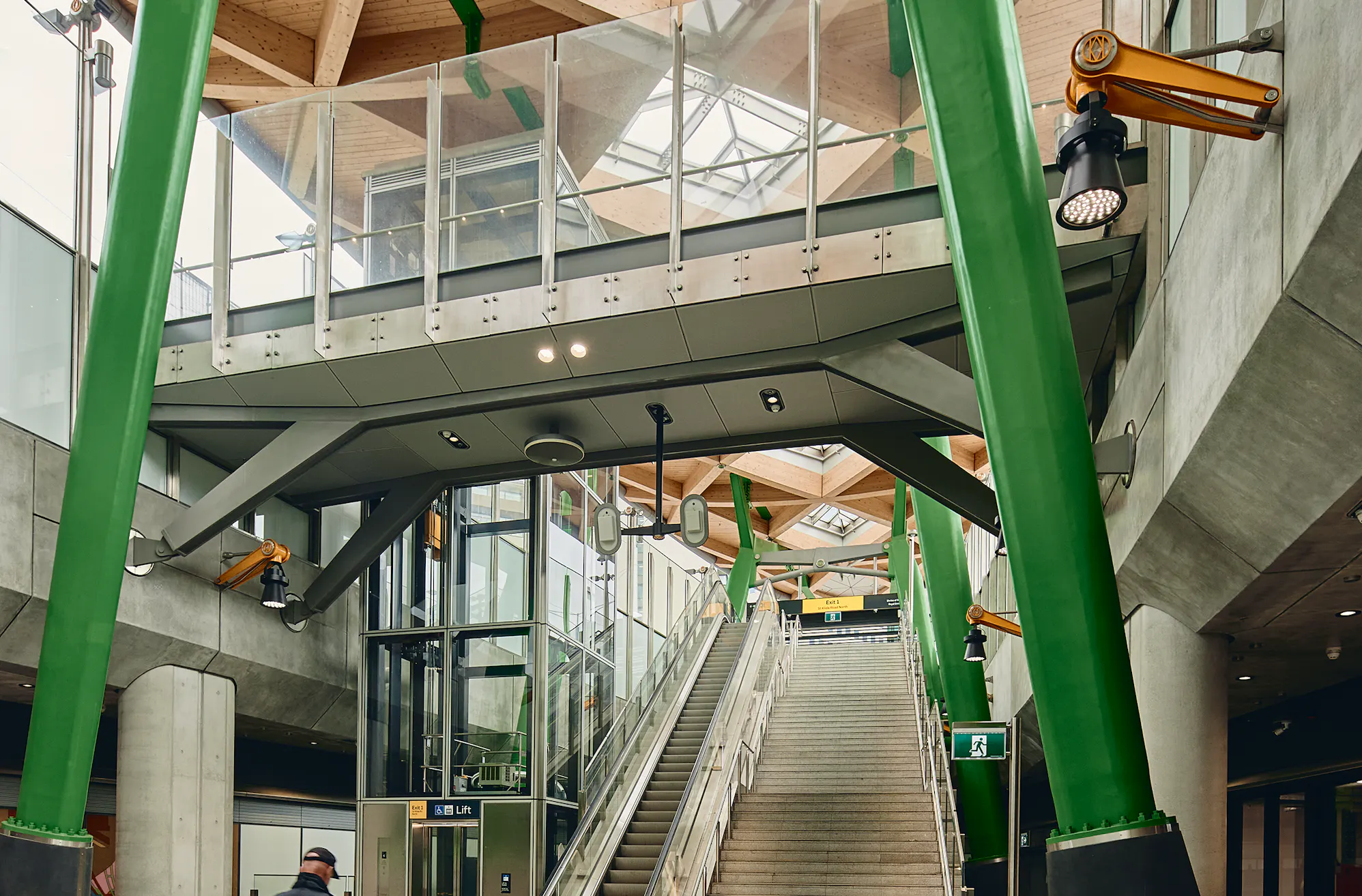
The Melbourne Metro Tunnel represents a transformative investment in the city's future, delivering not only essential transport infrastructure but also architectural landmarks and revitalised public spaces that will enrich the lives of Melburnians for decades to come.
The Metro Tunnel project has been delivered by the State Government of Victoria through The Victorian Infrastructure Delivery Authority and its project office VIDA Metro. The principal contractor is the Cross Yarra Partnership (CYP) a Public Private Partnership consisting of Lendlease Engineering, John Holland and Bouygues Construction.
Images: Peter Bennetts | https://peterbennetts.com/
Find out more about Melbourne Metro Tunnel Project: Melbourne Metro | WW+P